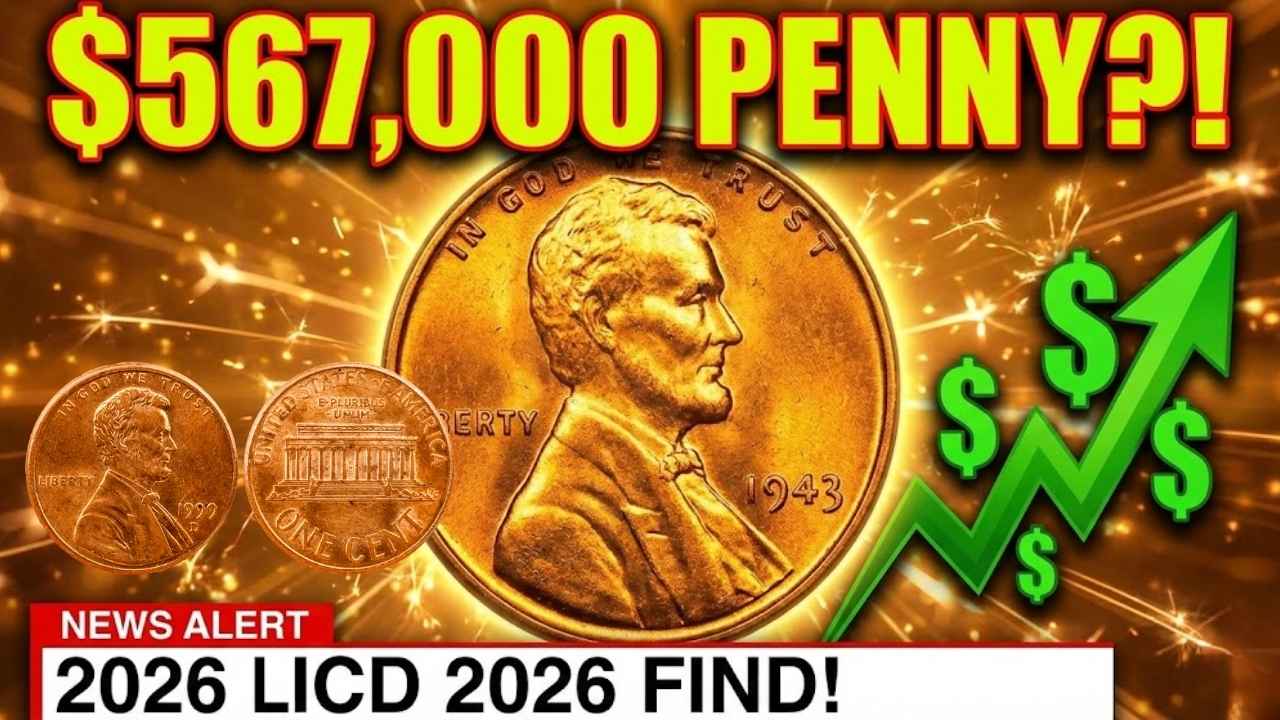
A rare Lincoln Wheat Penny has taken center stage in 2026 after selling for an astonishing $567,000, making it one of the year’s most valuable penny finds. The remarkable sale has reignited excitement among collectors and everyday Americans alike, proving that even a small copper coin can carry extraordinary worth. Experts say this headline-grabbing discovery highlights the growing demand for valuable penny coins in today’s competitive rare coin market.
$567,000 Lincoln Wheat Penny: Why This Coin Is So Valuable
The Lincoln Wheat Penny, first introduced in 1909 by the United States Mint, remains one of the most widely collected coins in American history. While billions were produced between 1909 and 1958, only a small fraction possess the rare characteristics that can push values into six-figure territory.
The penny that achieved the $567,000 price tag reportedly features a rare date-and-mint combination along with exceptional preservation. In the world of numismatics, rarity and condition are the two most critical drivers of value. When a scarce variety survives in near-perfect Mint State condition, competitive bidding can quickly elevate its final auction price.
Key Features That Make Lincoln Wheat Pennies Valuable
Not every Lincoln Wheat Penny is worth thousands — but certain traits dramatically increase market value. Collectors and grading professionals look for specific indicators that separate ordinary coins from extraordinary finds.
- Rare mint marks or low-mintage years
- Double die errors or striking anomalies
- Exceptional Mint State grading
- Strong eye appeal and minimal surface marks
Coins that combine two or more of these features are especially desirable. The $567,000 example reportedly checked multiple boxes, making it one of the most talked-about valuable penny coins of 2026.
Historic Appeal of the Lincoln Wheat Penny
The Lincoln Wheat Penny marked a turning point in American coinage when it debuted in 1909. It was the first U.S. coin to feature a real historical figure — President Abraham Lincoln — rather than a symbolic representation of Liberty. The design, created by Victor David Brenner, showcases Lincoln’s portrait on the obverse and two wheat stalks on the reverse.
Because of its long production run and cultural familiarity, the coin holds nostalgic value for many Americans. However, its historical importance also fuels serious collector demand, particularly for early issues and error varieties. As a result, standout specimens often command strong auction prices.
How Grading Influences Valuable Penny Coins
Professional grading plays a major role in determining how much a Lincoln Wheat Penny is worth. Coins are evaluated on a scale from Poor (P-1) to Mint State (MS-70), with higher grades reflecting superior preservation.
A difference of just a single grade point can translate into tens or even hundreds of thousands of dollars in market value. Coins certified by leading grading services typically attract higher bids because authenticity and condition are independently verified.
2026 Trends in the Rare Penny Market
The $567,000 Lincoln Wheat Penny sale underscores broader trends in the 2026 rare coin market. Collectors are increasingly seeking tangible assets with historical significance, and rare U.S. pennies continue to generate strong interest. Auction houses report heightened competition for top-quality copper coins, especially those with verified rarity.
As Valuable Penny Coins dominate numismatic headlines this year, experts encourage collectors to examine old jars, inherited coin albums, and estate collections carefully. While most pennies remain worth only face value, rare examples can still surface unexpectedly.
The record-setting $567,000 Lincoln Wheat Penny serves as a powerful reminder: sometimes, the most valuable treasures come in the smallest denominations. In 2026, the hunt for rare penny coins is stronger than ever — and the next life-changing discovery could already be in circulation.