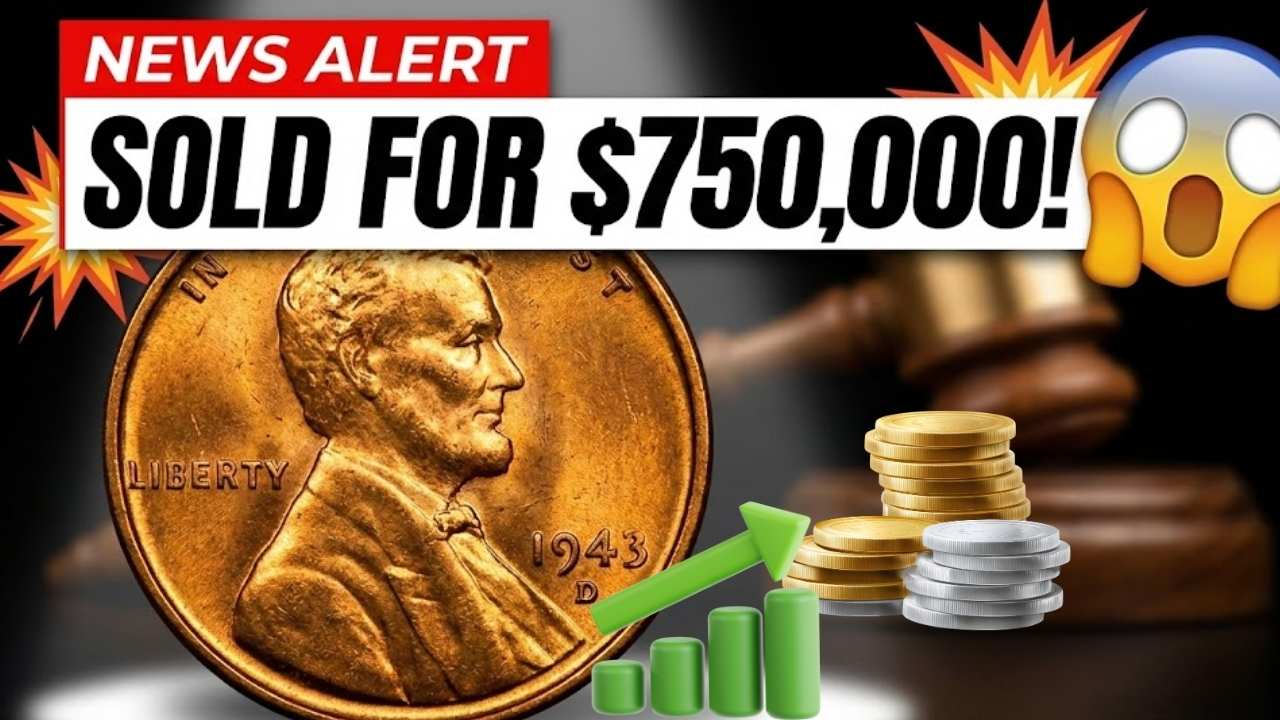
Why This Lincoln Wheat Penny Sold for $750,000 at Auction – Rare Coin News
A rare Lincoln Wheat Penny recently made headlines after selling for a remarkable $750,000 at auction, captivating collectors and investors around the world. Once everyday pocket change, this historic penny’s value has skyrocketed due to its rarity, extraordinary condition, and unique characteristics. Experts say its sale highlights the continued strength of the rare coin market in 2026.
Lincoln Wheat Penny Sold for $750,000: What Makes It So Valuable?
The Lincoln Wheat Penny is one of the most iconic American coins in history, first issued in 1909 to commemorate Abraham Lincoln’s 100th birthday. Designed by Victor David Brenner, the coin’s reverse originally featured two wheat stalks, giving it the popular name “Wheat Penny.” Millions were produced over several decades, yet only a handful of rare varieties now command extraordinary prices.
According to rare coin specialists present at the auction, the $750,000 sale price was driven primarily by the penny’s near-perfect condition and extremely limited surviving examples. Coins with rare mint marks, errors, or unique production variations are among the most sought-after by collectors.
Rare Mint Marks and Varieties in Popular Rare Coin News
Not all Lincoln Wheat Pennies are equally valuable. Specialist numismatists focus on specific mint marks and unusual error varieties that set rare coins apart from typical circulation issues. Known rare designations include early production years and coins with notable striking anomalies.
Examples of sought-after features include:
- Mint marks from low-production facilities
- Misprints, double dies, or other unique errors
- Exceptional grading by professional services
This particular penny combined multiple desirable traits, capturing the attention of high-end collectors and driving competitive bidding at the auction.
History of the Lincoln Wheat Penny in U.S. Coinage
The Lincoln Wheat Penny was introduced by the United States Mint in 1909 as the first U.S. coin to feature a real historical figure, President Abraham Lincoln. Its creation marked a departure from earlier coinage designs and immediately became popular with the public.
Produced through 1958, the Wheat Penny became a staple of everyday commerce. Its long circulation history means that well-preserved examples are extremely rare, especially for early dates and limited runs. Over time, collectors began to discover that some specific editions of the Wheat Penny carried exceptional value.
Grading and Condition: Why Penny Quality Drives Value
In the world of rare coins, condition is paramount. Coins are professionally graded on a scale from Poor (P) to Perfect Mint State (MS-70). High grades indicate minimal wear and excellent preservation, often resulting in exponentially higher values compared to worn examples.
- Uncirculated Mint State condition
- Exceptional surface quality with no visible marks
- Clear and sharp design details
- Certified by leading grading services
The $750,000 Lincoln Wheat Penny achieved one of the highest grades ever recorded for its variety, making it highly desirable among serious collectors.
Record Auction Results and What They Mean for Collectors
The recent sale of this exceptional Lincoln Wheat Penny at auction reflects broader trends in the rare coin market. With increasing interest from both seasoned numismatists and new investors, top-tier coins are commanding record prices. Auction houses now draw global participation, leading to competitive bidding and significant price milestones.
Collectors and investors alike see rare coins as tangible assets with historical significance and long-term value potential. As a result, headline-grabbing sales like this one continue to generate attention in the numismatic community and beyond.
While the majority of Lincoln Wheat Pennies remain modest in value, rare examples with unique characteristics will continue to make Rare Coin News as market interest grows in 2026 and beyond.
For anyone holding old pennies from family collections, a professional evaluation could reveal hidden treasure — perhaps even the next headline-making sale.