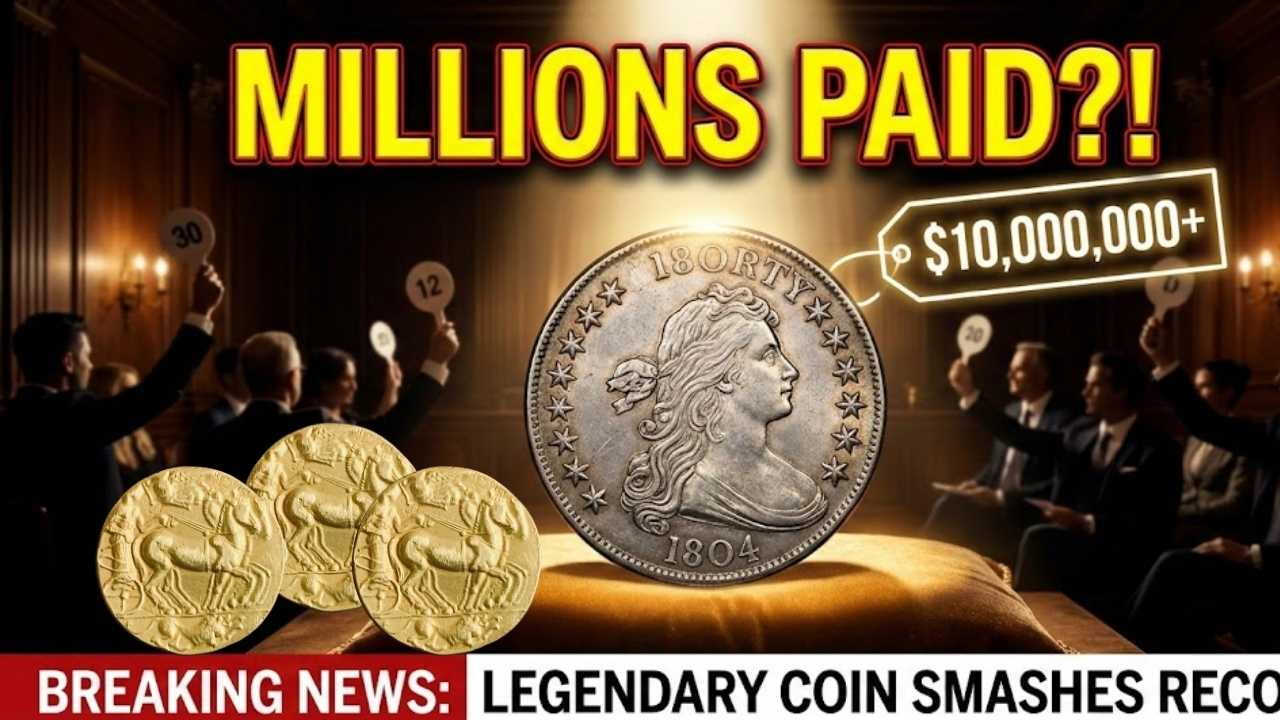
A stunning 1804 Draped Bust Dollar has once again captured the attention of the numismatic world, drawing multimillion-dollar bids at major auctions and cementing its status as one of the most coveted American coins. Known among experts as the “King of American Coins,” this legendary silver dollar continues to set records and fascinate collectors with its rarity and historic importance.
Why the 1804 Draped Bust Dollar Commands Millions in Auctions
The 1804 Draped Bust Dollar is widely regarded as one of the rarest and most valuable coins in United States numismatics. Interestingly, although the coin carries the date 1804, most known examples were actually struck decades later as special presentation pieces. This unusual origin story adds to the coin’s mystique and significantly boosts its market value.
Only a very limited number of authentic specimens are known to exist worldwide. Because of this extreme scarcity, each time an example appears at auction it generates intense competition among elite collectors. The combination of rarity, historical significance, and strong demand often pushes final sale prices into the multimillion-dollar range.
Record-Breaking Auction Sales Fuel Coin Auction News
Over the years, the 1804 Draped Bust Dollar has consistently delivered headline-making auction results. Several verified examples have crossed the $3 million, $5 million, and even higher price thresholds depending on condition and classification.
- Extremely limited surviving population
- Distinct “Class” varieties that impact rarity
- High professional grading scores
- Documented ownership history (provenance)
These factors combine to create extraordinary demand whenever a specimen becomes available. Auction houses report global participation, with private collectors and institutional buyers competing aggressively for ownership.
The Historical Significance of the 1804 Draped Bust Dollar
The 1804 Draped Bust Dollar holds a unique place in American coin history. While no silver dollars were originally struck for circulation in 1804, later diplomatic presentation sets required examples bearing that date. As a result, a small number of coins were produced in later years but dated 1804, creating one of the most fascinating stories in U.S. numismatics.
Because these coins were never meant for everyday commerce, their limited production ensured rarity from the very beginning. Today, each known example is carefully documented and categorized into specific classes based on how and when it was struck. This detailed classification further enhances collector interest and investment value.
Rarity, Grading, and Provenance Drive US Coin Value
In the rare coin market, value is influenced by several critical elements. Professional grading services evaluate each coin’s condition on a standardized scale, and even small differences in preservation can result in dramatic price variations.
For the 1804 Draped Bust Dollar, coins with sharp details, minimal wear, and strong eye appeal command the highest prices. Additionally, examples with prestigious ownership histories often achieve premium results due to their traceable lineage and authenticity assurance.
What This Means for the Rare Coin Market in 2026
The continued multimillion-dollar sales of the 1804 Draped Bust Dollar highlight the strength of the rare U.S. coin market. Collectors increasingly view historically significant coins as tangible assets that combine cultural heritage with long-term investment potential.
As Coin Auction News continues to spotlight record-breaking results, the 1804 Draped Bust Dollar remains a benchmark for rarity and prestige. While only a select few will ever own one, its enduring appeal serves as a reminder that historic American coins can achieve extraordinary value when rarity and demand align.
For serious collectors and investors, the legend of the 1804 Draped Bust Dollar is more than just history — it is a symbol of the remarkable heights that numismatics can reach in today’s competitive global market.